

Blog
How the Right End Mill Determines CAM Machining Success

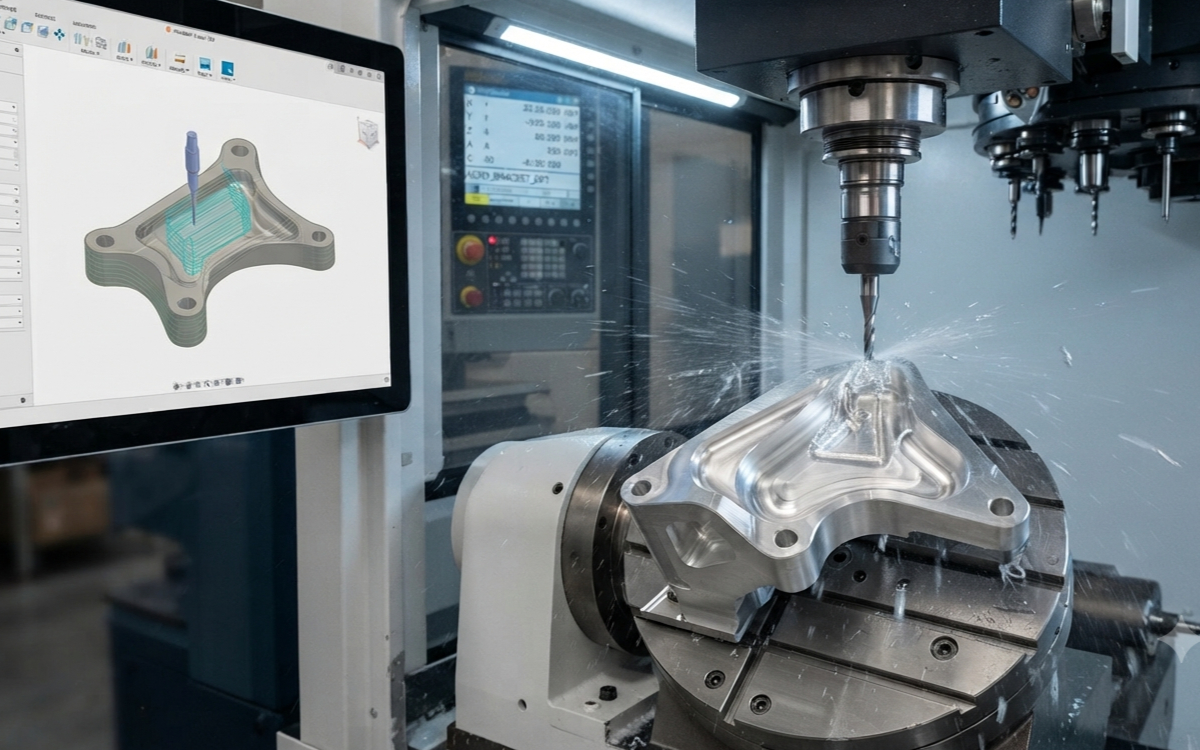
The Art of Choosing the Right Cutting Tool: How the Right End Mill Determines CAM Machining Success
In CNC machining, a high-quality 3D model and a carefully planned CAM strategy are only half the equation. Even the most optimized toolpath cannot deliver quality results if the cutting tool is poorly selected. The choice of end mill directly affects machining speed, tool life, surface finish, and ultimately, the overall cost of the project.
So, how do you choose the right cutting tool for different CAM operations? Let’s explore the key factors.
1. Tool Material: Carbide vs. High-Speed Steel
Carbide End Mills
Solid carbide end mills have become the industry standard in modern manufacturing. They offer exceptional rigidity, maintain sharp cutting edges for longer periods, and allow significantly higher cutting speeds. Carbide tools are ideal for machining steel, aluminum, stainless steel, titanium, and composite materials.
High-Speed Steel (HSS / HSS-Co)
Although less common in modern CNC production, HSS and cobalt HSS tools remain useful for manual machining, older machines with lower spindle speeds, and certain softer materials where improved resistance to impact loading is beneficial.
2. End Mill Geometry and Applications
Roughing End Mills
Also known as hogging mills, roughing end mills feature serrated or chip-breaking cutting edges that divide thick chips into smaller segments. This geometry allows aggressive material removal while reducing cutting forces and spindle load, making them ideal for rough machining operations.
Flat End Mills
Flat end mills are among the most versatile cutting tools in any workshop. They are widely used for roughing and finishing flat surfaces, pockets, slots, shoulders, and vertical walls.
Ball Nose End Mills
Ball nose cutters are indispensable for 3D contouring of complex freeform surfaces, molds, dies, artistic carvings, and sculptured components. Achieving an excellent surface finish largely depends on selecting an appropriate stepover value within the CAM software when using ball-end tools.
Corner Radius (Bull Nose) End Mills
These tools combine the advantages of flat end mills with a small corner radius. Compared to sharp-edged tools, they are considerably stronger, less prone to chipping, and particularly well suited for high-speed machining (HSM) and adaptive toolpaths.
3. Number of Flutes and Material Compatibility
Aluminum and Non-Ferrous Metals
For aluminum, copper, brass, and other non-ferrous materials, machinists typically use end mills with one to three flutes and large flute valleys for efficient chip evacuation. Polished flutes are especially important to prevent chip welding and built-up edge formation.
Steel and Harder Materials
Machining steel, stainless steel, and hardened alloys generally requires four or more flutes. Multi-flute cutters distribute cutting forces more evenly, improve rigidity, and produce superior surface finishes during finishing operations.
Conclusion
Selecting the right end mill is always a balance between the rigidity of the entire machining system—machine tool, workholding, cutting tool, and workpiece—and the cutting parameters programmed in the CAM software.
When modern machining strategies such as Adaptive Clearing are combined with properly selected solid carbide tooling, manufacturers can dramatically extend tool life, reduce machining time, improve surface quality, and achieve more efficient CNC production.